
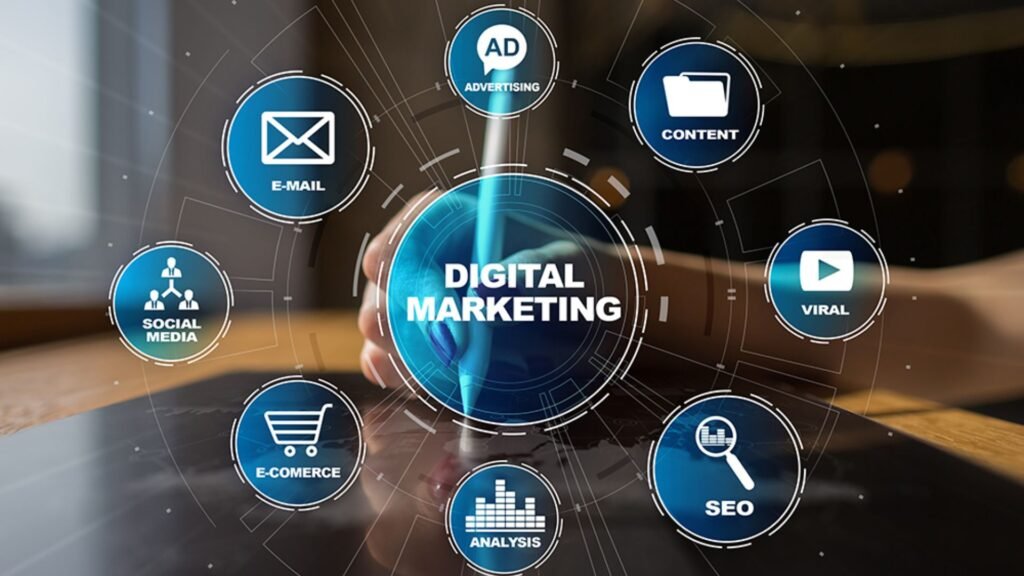
In today’s fast-moving digital world, having a business without an online presence is like opening a shop in the middle of a desert. Whether you run a startup, local business, eCommerce store, or personal brand, digital marketing helps you reach the right audience, build trust, and increase sales.
But what exactly is digital marketing, and why has it become essential for every business?
Let’s explore.
What is Digital Marketing?
Digital marketing is the process of promoting products or services using online channels such as search engines, websites, social media platforms, email, and mobile apps.
Unlike traditional marketing methods like newspapers or television ads, digital marketing allows businesses to connect directly with their target audience in a measurable and cost-effective way.
Some common digital marketing channels include:
- Search Engine Optimization (SEO)
- Social Media Marketing (SMM)
- Content Marketing
- Email Marketing
- Pay-Per-Click Advertising (PPC)
- Influencer Marketing
- Affiliate Marketing
Why Digital Marketing is Important
The internet has changed the way people discover, research, and buy products. Customers now search online before making purchasing decisions.
Here are some major benefits of digital marketing:
1. Global Reach
A small business can reach customers worldwide through digital platforms without opening physical stores.
2. Cost-Effective
Compared to traditional advertising, digital marketing offers better results at lower costs, especially for startups and small businesses.
3. Targeted Audience
Businesses can target users based on age, location, interests, behavior, and even purchase intent.
4. Measurable Results
With tools like Google Analytics, businesses can track traffic, conversions, and campaign performance in real time.
5. Better Customer Engagement
Social media and email marketing help brands build relationships and interact directly with customers.
Types of Digital Marketing
Search Engine Optimization (SEO)
SEO helps websites rank higher on search engines like Google. Higher rankings increase website visibility and organic traffic.
Key SEO techniques include:
- Keyword research
- On-page optimization
- Technical SEO
- Link building
- Content optimization
SEO is a long-term strategy that helps businesses generate consistent traffic without paying for ads.
Social Media Marketing
Platforms like Instagram, Facebook, LinkedIn, and YouTube allow businesses to connect with millions of users daily.
Benefits include:
- Brand awareness
- Audience engagement
- Lead generation
- Customer support
- Community building
Consistent posting and high-quality content are key to success on social media.
Content Marketing
Content marketing focuses on creating valuable and informative content to attract and retain customers.
Popular content formats:
- Blog posts
- Videos
- Infographics
- Podcasts
- Case studies
- eBooks
Good content builds trust and positions businesses as industry experts.
Pay-Per-Click Advertising (PPC)
PPC advertising allows businesses to display ads on search engines and social platforms.
Popular platforms:
Businesses only pay when users click on their ads, making PPC highly performance-driven.
Email Marketing
Email marketing remains one of the highest ROI marketing strategies.
Businesses use email to:
- Promote products
- Share updates
- Send newsletters
- Recover abandoned carts
- Build customer loyalty
Personalized and well-designed emails can significantly improve conversions.
Latest Digital Marketing Trends
Digital marketing continues to evolve rapidly. Some current trends include:
AI-Powered Marketing
Artificial intelligence helps automate campaigns, analyze customer behavior, and personalize content.
Short-Form Video Content
Platforms like TikTok and Instagram Reels have made short videos one of the most effective content formats.
Voice Search Optimization
More users are searching through voice assistants like Google Assistant and Amazon Alexa.
Influencer Marketing
Brands collaborate with creators and influencers to reach highly engaged audiences.
Data Privacy & First-Party Data
Businesses are focusing more on ethical data collection and customer privacy.
How to Build a Successful Digital Marketing Strategy
Here are simple steps businesses can follow:
- Define clear goals
- Identify target audience
- Build a professional website
- Create valuable content
- Optimize for SEO
- Use social media consistently
- Run targeted ads
- Analyze and improve performance regularly
A successful strategy combines creativity, consistency, and data analysis.
Common Mistakes to Avoid
Many businesses fail in digital marketing because they:
- Ignore SEO
- Post inconsistently
- Focus only on sales
- Target the wrong audience
- Avoid analyzing campaign data
- Neglect mobile optimization
Avoiding these mistakes can improve long-term growth.
Final Thoughts
Digital marketing is no longer optional — it is essential for business growth in the modern world. Whether you want to increase website traffic, generate leads, improve brand awareness, or boost sales, digital marketing provides powerful tools to achieve your goals.
The best part is that businesses of all sizes can benefit from it. With the right strategy and consistent effort, digital marketing can transform a small business into a recognizable brand.
As technology continues to evolve, businesses that adapt to digital trends will stay ahead of the competition and build stronger connections with their customers.